
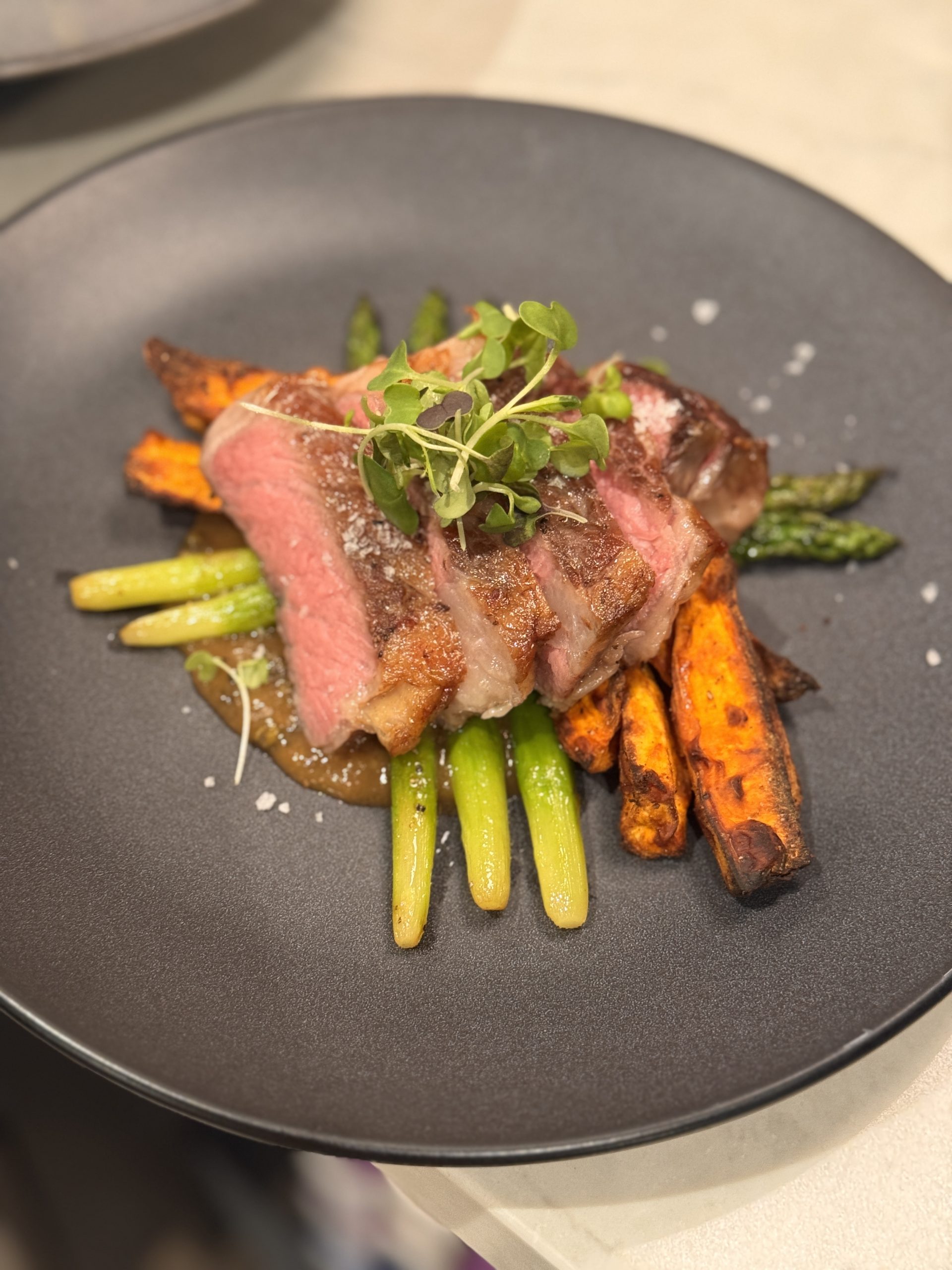
Eating well is relatively easy when you have time.
The harder version is eating well when your first meeting starts early, lunch gets pushed back twice, you leave work later than expected, and the dinner you planned to make suddenly isn’t happening.
For busy professionals, this is often the real problem.
Most people already know the basics. Eat enough protein. Include fruits and vegetables. Drink water. Don’t live entirely on takeout.
Knowing what to do and consistently doing it within a demanding schedule are two very different things.
At Elevated Kitchen Experience, this is something we think about when preparing personalized meals for professionals, athletes, and busy households. A good food routine has to survive the difficult days, not just the days when everything goes according to plan.
And that starts with building around your actual life.
Start With Your Calendar, Not a Meal Plan
A traditional meal plan usually starts with food.
Monday: salmon.
Tuesday: chicken.
Wednesday: pasta.
For someone with a demanding schedule, it can be more useful to start with the calendar.
Look at the week ahead.
Which mornings start particularly early?
Which days have meetings stacked through lunch?
When are you working from home?
When are you training?
Which evening will you realistically get home too late to cook?
Are you traveling?
Then plan food around those constraints.
If Tuesday regularly includes meetings from 11:00 to 2:00, Tuesday lunch shouldn’t depend on finding an open hour.
If Thursday ends late, Thursday dinner shouldn’t require grocery shopping and 45 minutes at the stove.
This is one of the simplest ways to make healthy eating more realistic.
Don’t build a perfect meal plan and hope your schedule cooperates.
Build your meals around the schedule you already have.
Find the Part of the Day That Keeps Falling Apart
You probably don’t need to overhaul everything you eat.
Instead, identify where your current routine consistently stops working.
For some people, it’s breakfast.
The morning starts quickly, coffee takes over, and the first real meal happens hours later.
For others, it’s lunch. Meetings run long and suddenly it’s 3:00 p.m.
For many professionals, dinner is the breaking point. After making decisions all day, planning, shopping, cooking, and cleaning feels like more effort than ordering something.
Once you identify the problem, you can solve something specific.
If lunch keeps disappearing, prepare lunches first.
If dinner becomes takeout four nights a week, focus on having dinners ready.
If mornings are chaotic, make breakfast something that requires almost no thought.
Healthy eating becomes much more manageable when you stop trying to fix everything at once.
Don’t Confuse “Healthy” With “Light”
This is a common problem among busy people.
Breakfast is coffee and fruit.
Lunch is a small salad.
Then sometime around 4:00, you’re exhausted and looking for anything that will get you through the rest of the day.
The problem may not be that you chose the wrong snack.
You may simply not have eaten enough earlier.
A useful meal generally needs enough substance to actually function as a meal. Depending on the individual, that often means combining a source of protein with carbohydrates, fats, and produce rather than building the entire meal around a single nutrient or trying to make it as light as possible.
For example, a salad can absolutely be a substantial lunch.
But there is a difference between a bowl of greens with a little chicken and a thoughtfully composed salad with protein, grains or another carbohydrate source, seasonal vegetables, avocado or another fat source, herbs, and a satisfying dressing.
One is technically lunch.
The other has a much better chance of carrying you through a demanding afternoon.
Protein Matters. So Does Everything Around It.
Protein has become one of the dominant conversations in nutrition, particularly among people who exercise regularly.
It matters.
But a high-protein diet isn’t automatically a well-rounded diet.
Carbohydrates provide an important source of energy, particularly for active people. Dietary fats play essential roles throughout the body. Fruits, vegetables, whole grains, legumes, nuts, seeds, herbs, and other plant foods contribute fiber and a wide range of vitamins, minerals, and other compounds.
For busy professionals, the bigger problem is often variety.
Convenience encourages repetition.
The same breakfast.
The same salad.
The same three takeout orders.
The same “healthy” dinner every evening.
Over time, even a nutritionally reasonable routine can become incredibly boring.
This is one reason seasonality is important in the way we cook at Elevated Kitchen Experience.
Changing vegetables, fruits, grains, proteins, herbs, sauces, and preparation methods throughout the year keeps food interesting without making eating well unnecessarily complicated.
Make Lunch Easier Than Skipping Lunch
Lunch has an unfortunate position in the professional workday.
It’s right in the middle of everything.
A meeting runs long.
Someone calls.
An urgent email arrives.
Suddenly the hour you expected to have is gone.
Instead of relying on protecting a perfect lunch break every day, reduce the amount of effort required to eat.
A prepared lunch changes the equation.
There’s no restaurant to choose.
No delivery time.
No menu to scroll through.
No decision about whether you have time to leave.
You simply eat.
This is one of the places where meal prep can have an outsized effect on the week. The most useful prepared meal isn’t always dinner. Sometimes it’s the lunch that prevents you from realizing at 3:30 that you’ve barely eaten.
Your Afternoon Slump May Have Started Hours Earlier
There is no single cause of the afternoon energy crash.
Sleep matters.
Stress matters.
Hydration matters.
Caffeine habits matter.
Your natural circadian rhythm matters.
Food can matter too.
If you consistently feel depleted in the afternoon, look backward before reaching for another coffee.
Did you eat breakfast?
Was lunch substantial?
Have you had water?
Are you trying to make a small midday meal last until a late dinner?
Sometimes the most useful change isn’t finding a special food for energy.
It’s eating an actual meal earlier in the day.
Have Food Ready for the Day That Goes Wrong
A good food routine needs a contingency plan.
Flights get delayed.
Children get sick.
Calls run long.
Deadlines appear.
Dinner reservations get canceled.
You aren’t failing at meal planning when this happens. This is normal life.
Keep a few dependable options available at home or work that can become a quick meal or substantial snack.
The exact foods depend on your dietary needs and preferences. The principle is more important than the specific list.
Make sure an unexpectedly busy day doesn’t leave you with only two choices: skip eating or order whatever arrives fastest.
Treat Travel as a Different Routine
Business travel is one of the quickest ways to disrupt eating habits.
Airports, hotels, conferences, client dinners, early flights, time changes, and late arrivals make maintaining your exact routine from home unrealistic.
So don’t expect it to be identical.
Instead, identify the parts you can control.
Breakfast is often easier to make predictable than dinner.
Keeping a few portable foods available can help when meetings run through meals.
Looking at the area around your hotel before you arrive can eliminate the 9:00 p.m. search for somewhere to eat.
Hydration is easy to overlook during flights and long meeting days.
And then there is the part almost nobody plans for:
Coming home.
You land late.
Your refrigerator is empty.
You’re tired.
Work starts again the next morning.
For frequent travelers, having fresh meals waiting at home can sometimes be more useful than trying to eat perfectly while away.
Dietary Restrictions Make Convenience More Complicated
Eating on a demanding schedule becomes considerably harder when you can’t simply eat whatever is available.
Someone who is gluten-free may need to think about ingredients and cross-contact.
Someone avoiding dairy may find that many convenient prepared foods don’t work.
Food allergies require another level of attention.
Vegetarian and plant-forward professionals may find that the only option at a catered meeting is technically compliant but not substantial enough to be a meal.
This is where customized meal prep differs significantly from choosing meals from a predetermined menu.
The question isn’t:
“What can we remove from this dish?”
It becomes:
“What would be delicious and satisfying for this person in the first place?”
That’s a very different way of cooking.
Meal Prep Doesn’t Have to Consume Your Sunday
Meal prep works extremely well for some people.
If you enjoy spending Sunday afternoon cooking, there’s no reason to stop.
But for many professionals, the weekend is when they’re trying to recover from the week, see family, exercise, spend time outside, or simply have a few hours where nothing is scheduled.
Spending several of those hours planning meals, grocery shopping, cooking, portioning, and cleaning may solve the weekday food problem by creating a weekend time problem.
There are alternatives.
Some people prepare only a few key meals.
Some batch-cook ingredients and assemble meals throughout the week.
Some combine home cooking with prepared food.
Some use meal delivery.
And some outsource the process to a private chef.
The right answer depends on how much you enjoy cooking, how predictable your schedule is, what you want to eat, your household’s dietary needs, and what your time is worth to you.
When Does a Private Chef Actually Make Sense?
A private chef isn’t automatically the best solution simply because someone is busy.
If you enjoy cooking, have time for it, and your current routine works, there may be no reason to change it.
Chef-prepared meal prep starts making more practical sense when food has become a recurring source of friction.
You’re regularly spending more on takeout than you’d like.
You have the means to buy excellent ingredients but rarely have time to prepare them.
You exercise regularly and want meals that fit an active lifestyle.
You or someone in your household has dietary restrictions.
You want family dinners without spending your evenings cooking.
Your work involves frequent travel.
You’re tired of eating generic prepared meals.
Or you’re spending several hours every week managing food and would rather use that time elsewhere.
For those households, outsourcing food can become less about luxury and more about infrastructure.
What Personalized Meal Prep Can Actually Look Like
One of the reasons we don’t believe in a one-size-fits-all approach at Elevated Kitchen Experience is that “busy professional” can describe completely different lives.
One client may need four lunches that can be reheated between meetings.
Another may train early and care much more about breakfast and post-workout meals.
Someone who travels regularly may want meals concentrated around the days they’re home.
A household with children may need family-style dinners rather than individual containers.
Someone managing dietary restrictions may primarily value knowing that everything in the refrigerator was prepared with those needs in mind.
And there are weeks when meal prep isn’t the only need.
Clients may want an in-home chef for a family dinner, an intimate gathering, or an evening with friends where they want to enjoy their own home rather than spend the night cooking.
The service should change with the person.
That’s the point of personalization.
Healthy Eating Has to Work on Your Busiest Day
It’s easy to eat well on the quiet Tuesday when you finish work at five and have groceries in the refrigerator.
A useful food routine also works when Tuesday isn’t quiet.
That’s the standard worth building around.
Look at where your week consistently gets difficult.
Prepare for those moments.
Eat enough during the day.
Keep backup options available.
Let your meals change with your schedule.
And if planning, shopping, cooking, and cleaning are consistently preventing you from eating the way you want to, consider whether those are tasks you still need to personally own.
At Elevated Kitchen Experience, our personalized meal prep and in-home private chef services are designed around exactly that idea.
The goal isn’t to make food another thing you optimize.
It’s to make eating well fit naturally into a life that’s already full.
Leave a Reply